

If you are running an IT services or product engineering company, you are probably thinking:
- Why are we not getting shortlisted in RFPs?
- Why do sales cycles drag even after strong POCs?
- Why are our outbound efforts not converting like they used to?
- And why is it so hard to hire top talent despite doing great work?
The answer to all these questions usually boils down to one thing: your digital brand presence.
Let’s understand what digital branding means for IT companies. Let’s discuss why now is the right time to focus on it and how to get it right.
The B2B Sales Cycle Has Changed – And It’s Not Forgiving
A few years ago, the B2B buying journey looked predictable: Discovery → Consideration → Decision.
Your sales team had an opportunity to engage with decision-makers early, explain the offering, and push the deal forward.
But that’s history.
In the new reality:
- 78% of buyers look at only three vendors.
- 71% pick the first vendor they engage with.
- Buyers spend less than 20% of their time with vendors; the rest is spent online—researching websites, blogs, and social media.
This means that –
- You are judged before the first meeting. Your website, blogs, GitHub presence, conference talks, and social proof form a picture long before a call.
- Consensus buying is the norm. Finance, security, operations, and end users all research independently. Your brand must speak to each of them.
- Partners and marketplaces influence lists. Hyperscalers, SaaS partners, and analyst notes shape who gets invited. If your brand does not show up, you do not get a slot.
- Dark social matters. Slack communities, private groups, and peer DMs spread impressions you will never see. Clear narratives and proof points help those micro-conversations tilt in your favor.
If your brand isn’t visible and credible during this discovery phase, you’re not late, you’re out.
Why Now Is the Right Time to Invest in Digital Branding

“We’ve managed without much branding so far. Why bother now?” – That’swhat many IT companies think.
Well, here’s why:
- RFPs are harder to crack. Procurement and legal teams prefer names they already recognize. Strong brand presence reduces friction and risk perception.
- Outbound isn’t working like before. Each prospect probably receives 20 other cold messages. Their inboxes are flooded. Without a clear, credible story online, even a relevant message looks generic. Buyers check your digital footprint before replying.
- Talent is choosing visibility. Your prospective candidates evaluate a company’s brand, learning culture, and tech voice. A weak footprint signals limited growth.
- Partnerships need credibility. If you want AWS, Microsoft, or ServiceNow to take you seriously, you need more than delivery capabilities – you need brand presence.
- AI changed discovery. Generative engines and answer boxes surface brands that publish consistent, structured, and credible content. If your content is thin or irregular, you will not appear.
What Digital Branding Really Means for IT
Digital branding isn’t just a fancy website or a few LinkedIn posts. It’s a structured play.
Multiple layers work together
- A strong narrative: The clear statement of what you solve, for whom, and why you win
- Proof: Case studies, demos, technical write-ups, references, and compliance readiness
- Digital Presence: Website, blog, docs, media, communities, partner listings, events
- Experience: How all functions, like sales, delivery, and hiring, share the same story
The Diverse Audiences You Need to Address
- Economic buyers — CFO, COO, business P&L leads
- Technical evaluators — architects, security, data, or platform owners
- Users and operators — admins, engineers, analysts
- Talent — candidates, alumni, interns, mentors
- Partners — hyperscalers, SaaS ecosystems, GSIs, ISVs
What It Really Takes to Build a Digital Brand
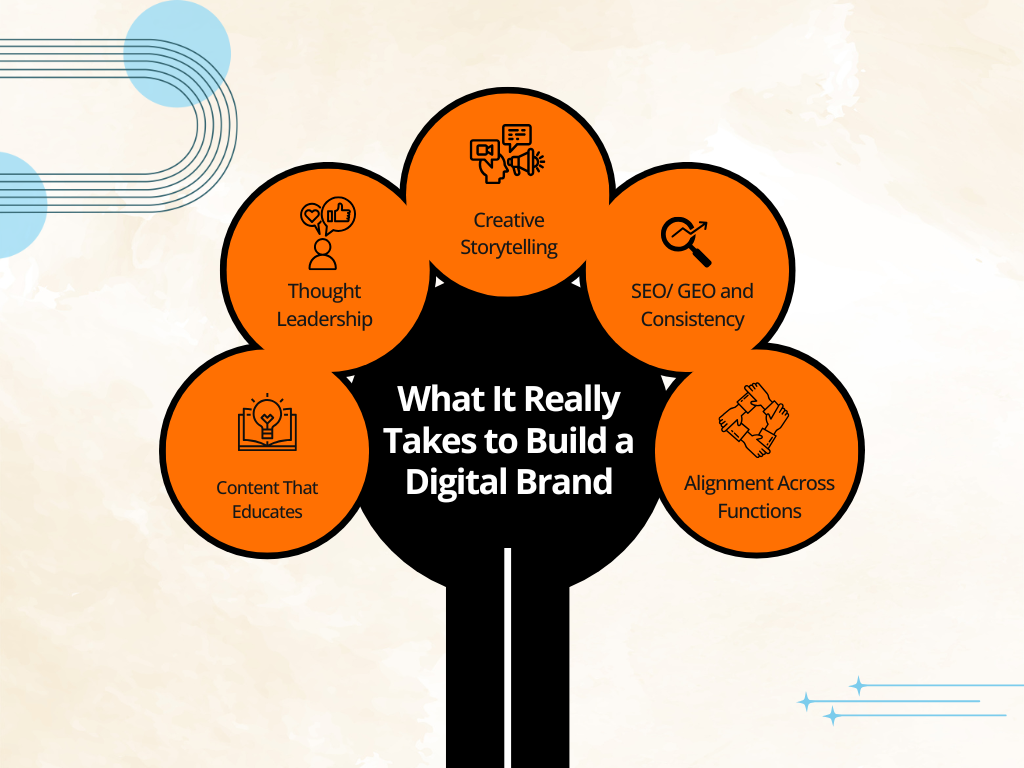
Here’s what goes into it:
1. Content That Educates
Not sales pitches, but blogs, case studies, and explainers that answer the real questions buyers and partners are searching for. You could publish
- Problem-first blogs that map business pain to a technical approach
- Solution explainers and reference architectures
- Short case abstracts without sensitive details
- Comparison posts that explain trade-offs
- Checklists, templates, SRE-style runbooks, and readiness guides
- AMA-style FAQs drawn from presales conversations
2. Thought Leadership
Your CXOs need to be visible. Opinion pieces, LinkedIn updates, interviews—they build trust faster than any brochure. Here, the focus areas can be
- CXO opinion pieces on market shifts and operating models
- Practice leaders talking about architecture choices, costs, and reliability
- Security and compliance perspectives aligned to your target industries
- Talks, panels, webinars, and office-hours style Q&A sessions
3. Creative Storytelling
“Myth vs Fact.” “Did You Know.” Polls. Carousels. Content that makes even technical themes scroll-stopping. Some interesting formats that work, include
- Myth vs fact, teardown threads, quick polls, and two-slide carousels
- Before-after visuals for workflows, costs, or MTTR
- Short demo clips and whiteboard-style explainers
- Architecture diagrams with callouts and caveats
4. SEO/ GEO and Consistency
If you’re not ranking on search or showing up in generative AI results, you’re invisible. Regular, keyword-focused publishing makes sure you’re found.
5. Alignment Across Functions
Whether it is sales, marketing, HR, or leadership, all need to speak the same brand language. That’s what builds credibility at every touchpoint.
Distribution that Drives Pipeline
- Owned: Website blog, email newsletter, product docs, webinars, and events pages
- Community: developer forums, Slack groups, meetups, and OSS contributions where appropriate
- Partners: Hyperscaler marketplaces, solution catalogs, and partner co-marketing
- Social: LinkedIn for thought pieces and carousels, YouTube or Loom for short demos
- Syndication: Guest posts and neutral publications where your audience reads
Pro Tip: Do not duplicate full blogs on LinkedIn — post a teaser with a link back to your site.
What You Can Expect (and How to Measure It)
What happens when you get digital branding right? And how do you know it’s working?
- Visibility: More LinkedIn followers, higher impressions, growing website traffic.
- Engagement: Blogs, newsletters, polls, and webinars that people actually interact with.
- Pipeline: Better RFP shortlists, more inbound leads, fewer stalled deals.
- Talent: A stronger employer brand that attracts qualified candidates.
- Trust: From customers, partners, and employees who now see you as the go-to expert.
The Ripple Effect of Digital Branding
When you strengthen your digital brand, the impact goes far beyond marketing:
- Existing Customers feel validated in their choice and stick around longer.
- Future Customers see you as credible before sales even steps in.
- Current Employees feel proud when their company looks like a leader.
- Prospective Talent chooses you over better-known competitors.
- Partners value you as a strategic ally, and not just another IT vendor.
Final Thoughts
Here’s the hard truth: your digital brand is having conversations with your market every day, whether you’re shaping it or not.
The companies that invest in systematic digital brand building – content, thought leadership, CXO visibility, and consistent storytelling – aren’t just winning deals. They’re building trust, attracting talent, and scaling faster.
In today’s IT landscape, your digital brand isn’t just marketing. It’s your first sales conversation, your recruitment pitch, and your growth story.
