


Over the past two decades of working with technology companies, I have seen this often- the decision to enter a new market is rarely a “next stage milestone” that companies pursue because they finally have bandwidth or feel they have saturated the current segment.
Today’s business climate is highly competitive, fragmented, and are evolving buying cycles. Therefore, new market entry is a strategic business play that protects future revenue. It helps companies ensure that they are not tied to the unpredictability of a single geography or a single customer type.
But New Markets Don’t Carry Your History
When you enter a new market,
- Nobody knows you
- Nobody has context
- Nobody carries reference memory of your work
- Nobody has any reason to assign you higher trust compared to anyone else offering similar technology capability.
So the default category you get placed in (unless proactively countered) is the bucket called “just another vendor”.
That single perception error can completely derail how prospects evaluate you, because once you are in that bucket, every conversation becomes transactional, short-term focused and price driven. You don’t get an opportunity to be strategic, value-driven or transformation-oriented.
Don’t Lead With Sales Before Leading With Familiarity
Most companies begin new market entry by increasing sales activity – more outreach, more messaging, more calling, more events. They believe that there success in the new market is directly proportional to the speed of sales.
However, sales only works efficiently when trust already exists. Especially in new markets, trust is the only resource you start with zero of.
Digital brand is what starts building familiarity, credibility and trust before the sales machine activates. By the time outreach begins, the market already has some emotional and cognitive frame of who you are and why you exist.
What Should Tech Companies Expect From Digital Branding In This Stage?
Digital branding should not be measured by short-term lead spikes or instant conversion jumps, because that is not how trust compounding works.
What companies should expect is
- Increased openness from early conversations
- Warmer first meetings
- Faster organisational acceptance of your relevance
- Smoother movement between sales stages
- A significantly stronger narrative position that allows you to avoid racing to the bottom on commercials.
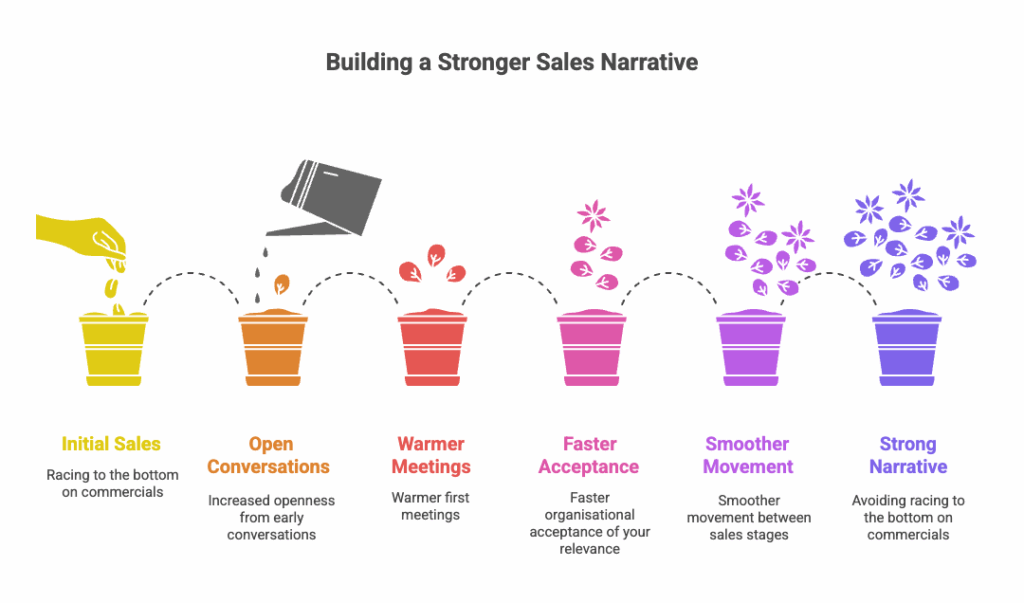
I have seen that digital brand lowers friction while elevating your perceived value. This combination leads to improved conversions.
How to Systematically Build a Brand Before Entering A New Market
Brand building is a structured asset development exercise. It requires clarity, consistency and narrative discipline.
Start by clearly defining the business problem space you will own, articulate your expertise in a way that is problem-first, not feature-first. Ensure your thought leadership, case learnings and worldview are visible and discoverable in public.
Your brand must feel coherent.
Practical Ways To Leverage Content, Social Media and CXO Personal Branding For Brand Building
The most powerful and underused lever in B2B is the voice of the leadership team – because people trust the thinking of humans far more than the promotional language of brand pages. When the founders, CTO, delivery heads and domain heads share their mental frameworks, belief systems and unique angles of interpretation, it builds trust. It gives buyers assurance that there are real thinking folks behind the company.
From the brand pages,
- Use content to show your depth and pattern recognition
- Publish insights that reflect actual implementation realities
- Become visible on LinkedIn where your ICP lives
- Engage in meaningful threads rather than merely posting promotional content
The Way Forward
Entering a new market is not about announcing loudly that you have arrived, it is about preparing the market to recognise you long before you speak.
In a world where evaluation begins silently, independently and digitally, your brand is the deciding factor between being ignored and being considered.
In new markets, the most expensive risk is being perceived as indistinguishable.
Brand is the foundation that makes growth possible.
